Hong Kong diesel prices remained stable for most of the year before surging 47.5% to a record HK$36.17 per litre in early 2026 due to Middle East geopolitical tensions, significantly increasing logistics costs and highlighting the need for fuel-efficiency measures, flexible pricing strategies, and long-term energy diversification.
Between April 2025 and April 2026, the Hong Kong diesel market demonstrated how quickly stable conditions can change. For most of the year, diesel prices remained relatively predictable, providing a stable foundation for logistics and transportation operators. However, early 2026 brought a sharp upward surge, driven by global geopolitical events, pushing pump prices to unprecedented levels.
This article analyses the key phases of this price trend, the underlying causes, and the strategic implications for businesses operating in Hong Kong’s commercial transport sector.
The Year in Review: Two Distinct Market Phases
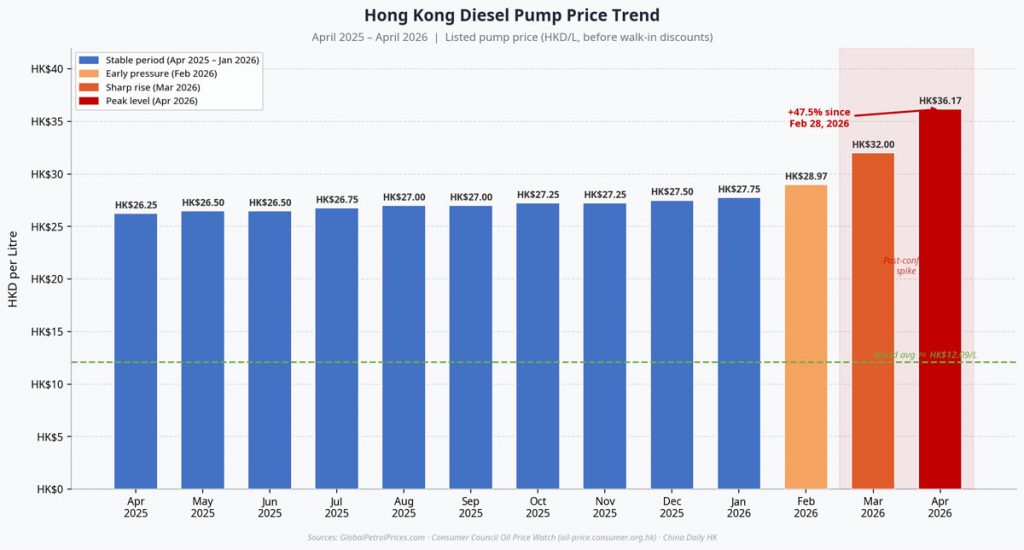
To understand the current market environment, we must look at the pricing data over the past 12 months. The chart below illustrates the dramatic shift from a balanced market to extreme volatility.
Phase 1: The Stable Period (April 2025 – February 2026)
For the first ten months of the period, diesel prices hovered within a narrow and predictable range. Listed pump prices remained steady between HK$26.25 and HK$27.75 per litre. During this time, global crude oil prices were relatively stable, reflecting steady supply and balanced demand.
This predictability allowed logistics companies, public transport operators, and construction firms to accurately forecast their fuel expenses and maintain consistent pricing strategies for their clients.
Phase 2: The Sudden Surge (March – April 2026)
The stability shattered in late February 2026. Following the escalation of conflict in the Middle East—specifically the airstrikes involving the United States, Israel, and Iran on February 28—global energy markets reacted violently. Brent crude oil futures spiked from around $70 per barrel to over $100 per barrel by early April.
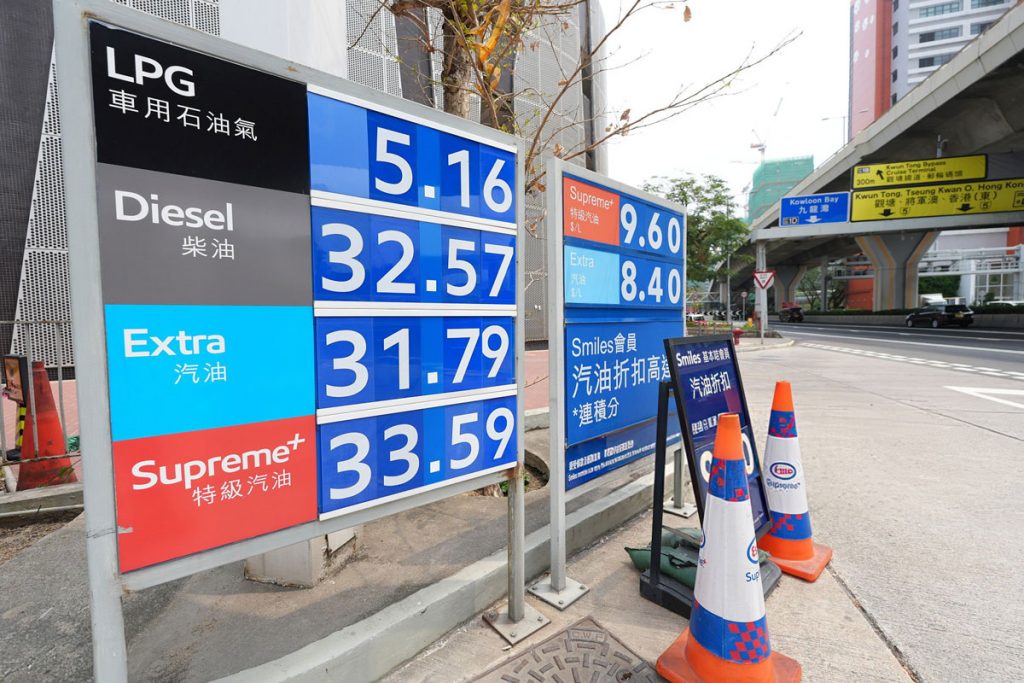
In Hong Kong, the impact at the pump was immediate and severe. By late April 2026, the listed price of diesel across major retailers had jumped to a uniform HK$36.17 per litre. This represents a staggering 47.5% increase since the end of February. When compared to the global average diesel price of approximately US$1.55 per litre (roughly HK$12.09), Hong Kong’s diesel prices are now nearly three times the world average.
Market Implications for the Logistics Sector
The sudden surge in diesel prices has placed immense pressure on Hong Kong’s commercial transport sector. The implications extend far beyond the fuel pump:
- Surging Operational Costs Fuel is one of the largest variable costs for any logistics operation. A recent industry survey revealed that over 80% of commercial drivers in Hong Kong saw their monthly income plummet by more than HK$5,000 due to the rising cost of diesel. While large corporate buyers can sometimes negotiate bulk discounts, smaller operators and self-employed drivers are forced to absorb the shock directly.
- Supply Chain Planning and Pricing The extreme volatility highlights the fragility of rigid pricing models. Logistics providers are increasingly forced to implement fuel surcharges to remain viable. The suddenness of the 2026 price spike underscores the importance of flexible procurement contracts and robust hedging strategies to mitigate future risks.
- Government Intervention Recognising the severity of the crisis, the Hong Kong government intervened on April 9, 2026, announcing a relief package that included a two-month subsidy of HK$3 per litre for diesel, alongside halved government tunnel tolls for commercial vehicles. While these measures provide temporary relief, they do not alter the underlying global market dynamics.
Strategic Recommendations for Businesses
Companies relying heavily on diesel must prepare for continued volatility. Based on the current market analysis, we recommend the following proactive measures:
- Enhance Cost Management: Businesses should urgently review their fuel consumption efficiency. This includes optimising delivery routes using advanced routing software, reducing engine idling time, and adopting fuel-saving driving techniques.
- Accelerate Diversification: The current crisis strengthens the business case for transitioning to alternative energy sources. Exploring hybrid or fully electric commercial vehicle options can significantly reduce reliance on volatile diesel markets over the long term.
- Monitor Trends and Policy: Maintain regular tracking of global crude oil prices, local pump prices via the Consumer Council’s Oil Price Watch, and government policy changes to anticipate future fluctuations and adjust pricing strategies accordingly.
Conclusion
The Hong Kong diesel market from April 2025 to April 2026 serves as a stark reminder of the logistics industry’s exposure to global energy shocks. While the government has provided short-term relief, the long-term solution requires structural changes in how businesses manage fuel risk.
At Nippon Express NEC Logistics Hong Kong (NECL), we leverage our advanced IT solutions and global network to help clients optimise their supply chains, improve route efficiency, and navigate the complexities of a volatile energy market. By adopting proactive cost-control measures and considering long-term energy diversification, businesses can build resilience against future price shocks.
How much did Hong Kong diesel prices increase in early 2026?
Following global geopolitical shocks in late February 2026, Hong Kong diesel pump prices surged by 47.5%, reaching HK$36.17 per litre by late April.
Why are Hong Kong diesel prices so high compared to the rest of the world
Hong Kong consistently ranks among the most expensive fuel markets globally. This is driven by a combination of high fixed government taxes, astronomical land costs for petrol stations, and high operating expenses, though some experts also point to wide profit margins maintained by retailers.
Is the Hong Kong government doing anything to help commercial drivers?
Yes. On April 9, 2026, the government announced a relief package that includes a two-month diesel subsidy of HK$3 per litre and a 50% reduction in government tunnel tolls for commercial vehicles.
Where can I track current diesel prices in Hong Kong?
The most reliable source for tracking daily pump prices and walk-in discounts across all major oil companies is the Consumer Council’s Oil Price Watch website.
How can logistics companies mitigate the impact of rising fuel costs?
Companies should focus on route optimisation, improving fuel efficiency, implementing dynamic fuel surcharges in client contracts, and exploring long-term transitions to electric or hybrid commercial vehicles.
References
- GlobalPetrolPrices.com. “Hong Kong diesel prices, 11-May-2026.” https://www.globalpetrolprices.com/Hong-Kong/diesel_prices/
- China Daily HK. “HK drivers feel pain as fuel prices soar amid global oil shock.” April 22, 2026. https://www.chinadailyhk.com/hk/article/632366
- Hong Kong SAR Government Press Release. “Government announces short-term targeted measures to address transport sector’s fuel costs.” April 9, 2026. https://www.info.gov.hk/gia/general/202604/09/P2026040900742.htm